
 Free Delivery & Return
 365-Day Returns
 10 Million Happy Customers
 500,000 Products in Stock


Armchairs (912)


Armchairs
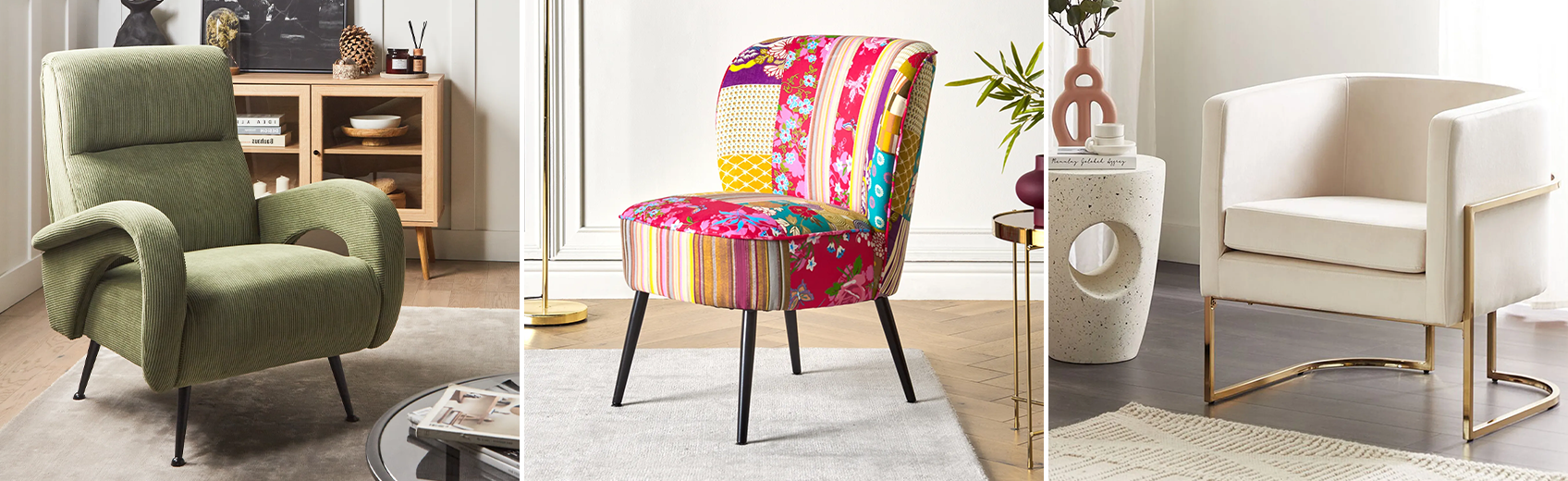
An armchair carries more weight in a room than its size suggests: it is often the piece people actually sit in, day after day, so getting it wrong is noticeable fast. Whether you need an everyday reading seat, a second seat for guests, or a statement piece that anchors the room, the right choice comes down to style, fit, role, and fabric. This page walks through how to match an armchair to your space, your habits, and the features worth paying attention to.
In short
Which armchair is right for you?
Match the chair to the space you have, how it will be used day to day, and the style, material and features that suit that use. Most armchairs measure around 80-90 cm wide and deep, with overall height ranging from about 70 cm for low lounge styles to over 100 cm for high-back or reclining versions, so check these figures against your floor plan first. Beyond size, an everyday seat needs a durable, easy-clean fabric, while a decorative piece can take a more delicate material, and any chair with moving parts (recline, swivel, massage) needs extra clearance around it.
- Room size and layout set the maximum width, depth and height you can fit
- How often the chair is used determines how durable the fabric needs to be
- Whether you want moving features (recline, swivel) adds a clearance requirement
How much space does an armchair actually need?
Start with the room, not the chair. Measure the spot you have in mind and compare it against the chair's full width and depth, including the armrests, rather than just the seat area. Most armchairs are 80-90 cm wide and deep, so a tight corner may only suit a slimmer design, while an open living room has room for a larger, deeper style.
Leave at least 60 cm of clear floor space in front of the chair so it can be used comfortably without feeling boxed in, and more again if it reclines or swivels. An armchair that overpowers the room, or gets lost among larger furniture, will feel wrong even if every other detail is right.
What are the main armchair styles?
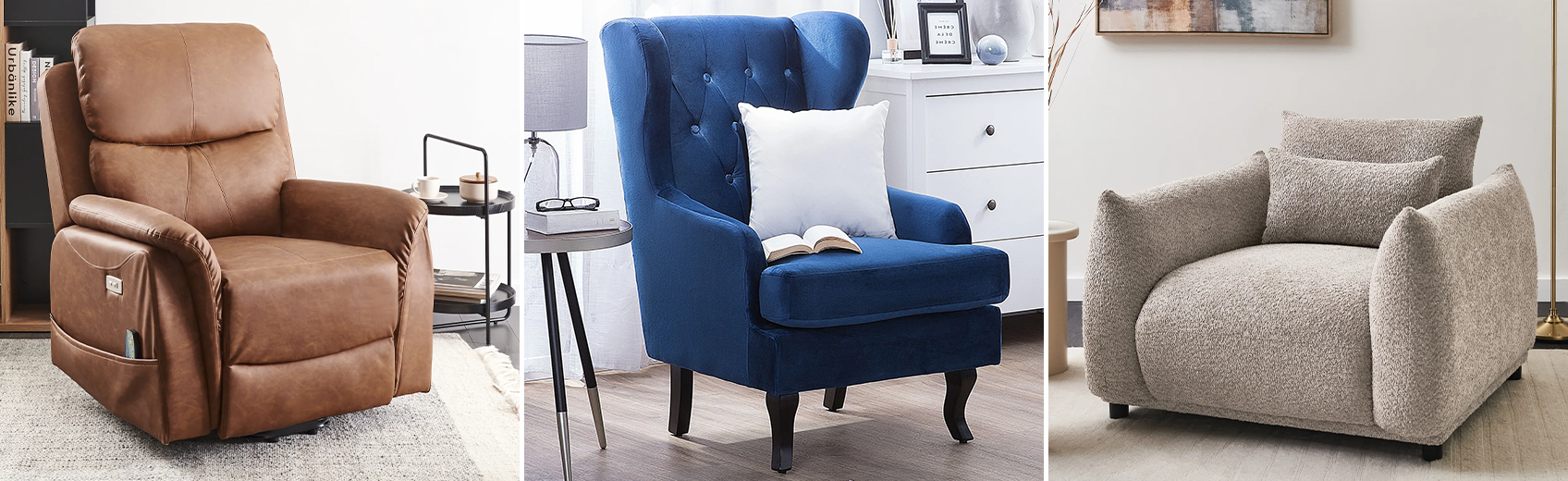
Armchair styles are easy to tell apart once you know what to look for:
- Wingback: tall side panels frame the sitter's head and were originally designed to block draughts, giving a traditional, formal look
- Club chair: low, deep and boxy, fully upholstered with short legs, built for a relaxed, informal seat
- Tub chair: a curved, rounded back wraps around into the arms, making it cosy and usually compact
- Chesterfield: deep button tufting and rolled arms at the same height as the backrest, usually in leather, for a classic, library-style look
- Bergère: an open wooden frame with an upholstered seat, back and closed sides, sitting between a fully upholstered chair and an exposed-frame design
- Egg or pod chair: a rounded, enclosing shell shape, often on a swivel or pedestal base, which suits a more contemporary room
- Papasan: a deep, bowl-shaped cushion set into a round frame, typically rattan, for a casual and relaxed look
- Accent chair: a broader category of chairs, often armless, chosen mainly for colour, shape or texture rather than for long-term lounging comfort
What role will the armchair play in your room?
Decide how the chair will actually be used before choosing how it looks. For a seat that gets used every day, prioritise an easy-to-maintain fabric and a supportive frame over appearance alone. For a chair that is mostly decorative, such as a reading corner accent or a statement piece near a window, you can choose a more delicate or eye-catching material since it will see less daily wear.
Which material suits daily use, and which suits a statement piece?
Armchair upholstery ranges from hard-wearing to purely decorative, and the right choice depends on how much use the chair will get and how much cleaning you are prepared to do.
| Material | Feel and look | Best for | Maintenance |
|---|---|---|---|
| Leather | Smooth, structured, develops a natural patina over time | Long-term daily use and households wanting a material that ages well | Wipe clean; needs occasional conditioning to prevent cracking and drying out |
| Faux leather | Same smooth, structured look as real leather at a lower price point, with a more uniform finish | Daily use, since spills wipe off easily | Wipe clean; no conditioning needed, but less breathable than real leather |
| Velvet | Soft, shiny pile with a dressed-up, glamorous look | Statement pieces in lower-traffic spaces | Needs regular brushing; marks more easily than woven fabrics |
| Bouclé | Plush, looped texture with a warm, casual feel | Relaxed living rooms and reading corners | Vacuum regularly; spot clean rather than scrub |
| Corduroy | Ribbed texture, warm and durable | Everyday use; hard-wearing and relaxed in look | Vacuum regularly; spot clean following the care label |
| Polyester | Versatile, neutral finish that suits most interiors | Budget-conscious, everyday use | Easy to clean; resists staining better than natural fabrics |
| Chenille | Soft, velvety texture with a similar cosy feel to velvet | Cosy, everyday seating in relaxed living spaces | Vacuum regularly; can snag, so keep away from pet claws |
| Rattan | Natural, woven look with a boho or rustic feel | Light, airy spaces; naturally durable frame | Wipe down; keep away from direct heat sources |
Shop now: leather armchairs and fabric armchairs
What additional features can an armchair have?
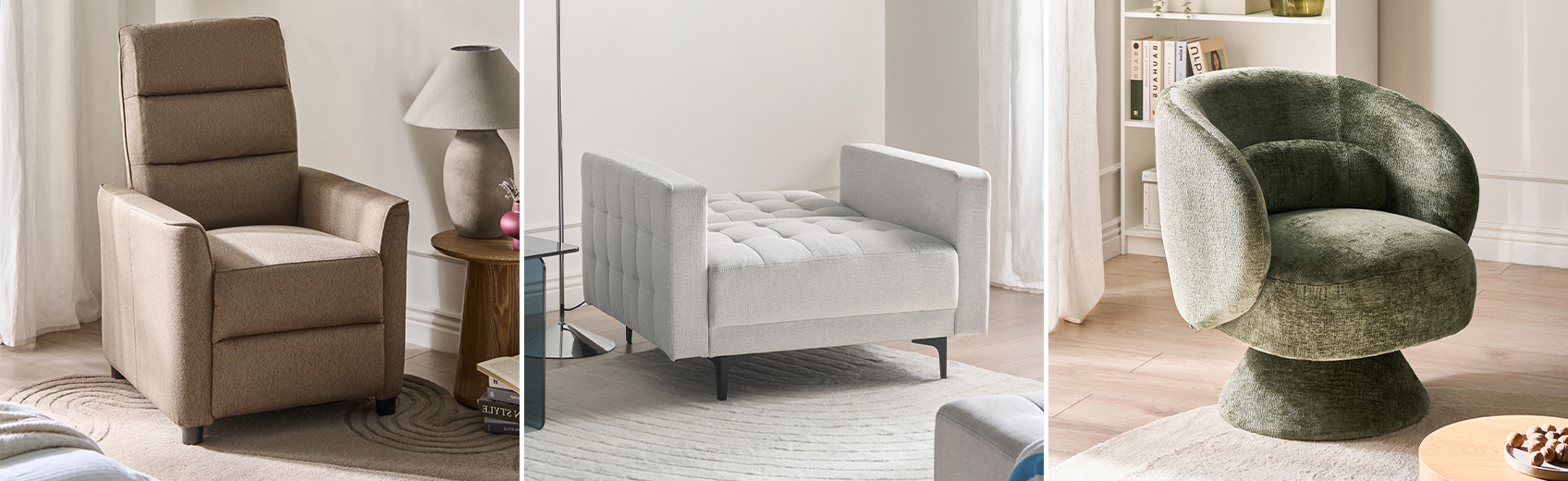
Beyond style and material, several armchairs add features that change how the chair is actually used day to day. These are worth considering once you know the role the chair will play in your room.
Comfort
Reclining and adjustable backrest
Useful for long sitting sessions and relaxing with your feet up. A tilting backrest and footrest can ease pressure on the back and legs, and let you adjust the chair for reading, watching TV or a nap.
Flexibility
Swivel base
Lets you rotate towards different parts of a multifunctional room without moving the chair itself. Useful near a TV, a desk, or a conversation area that shifts through the day.
Support
Footstool included
Raising your feet can make long sitting sessions more comfortable. A matching footstool can also double as extra seating or a side table when not in use.
Relaxation
Rocking motion
A gentle, repetitive motion that suits nurseries and living rooms alike. It works well as a dedicated relaxation seat rather than an everyday general-purpose chair.
Wellness
Massage function
Built-in programmes offer a massage for added relaxation after a long day. These chairs are usually larger and heavier than a standard armchair, so check the dimensions, clearance and weight before buying, and make sure a power socket is within reach.
Shop now: reclining armchairs and massage armchairs
How do you care for different armchair materials?
Day-to-day cleaning is quick once you match the method to the material, and most marks are easiest to deal with if you act before they set.
- Real leather: wipe weekly with a dry or barely damp cloth, and condition every 6 to 12 months to stop the surface from drying out and cracking
- Faux leather: wipe with a damp cloth and mild soap; avoid solvent-based cleaners, which can damage the coating
- Velvet and chenille: brush or vacuum gently with an upholstery attachment (following the direction of the pile on velvet), and blot spills immediately rather than rubbing
- Bouclé and corduroy: vacuum regularly to lift dust from the texture, and spot clean with a mild fabric cleaner, testing on a hidden area first
- Polyester: if the cover is removable, follow the care label for washing; fixed upholstery can be spot cleaned with a damp cloth
- Rattan: dust and wipe with a slightly damp cloth, and keep it away from direct heat sources and prolonged direct sunlight, which dry out the fibres
On fabric chairs, a fabric protector spray applied when the chair is new (tested on a hidden area first) adds a layer of stain resistance. Whatever the material, blotting a spill straight away rather than scrubbing makes the biggest difference to whether a mark comes out.
What to check before buying
Before you commit to an armchair, run through this checklist.
- The chair's full width and depth, including armrests, against your available space
- At least 60 cm of clear floor space in front of the chair for comfortable use
- Extra clearance behind and around the chair if it reclines or swivels
- A fabric that matches how often the chair will actually be sat in
- Whether a removable, washable cover matters for your household
- Frame material (wood or steel) if the chair will see daily, long-term use
- Weight capacity, and a power socket within reach, if choosing a massage or electric recliner chair
Learn more: the ultimate armchair buying guide
Frequently asked questions
How long does an armchair usually last?
A well-built armchair with a solid wood or steel frame typically lasts 10 to 15 years under daily use. Upholstery often needs refreshing before the frame does, so a removable or replaceable cover can extend the chair's working life considerably.
Can an armchair be reupholstered instead of replaced?
Yes, as long as the frame and padding are still structurally sound, reupholstering is usually cheaper than buying new and lets you switch fabric or colour entirely. It is rarely worth it if the frame itself is damaged or the foam has broken down.
What is the difference between an armchair and an accent chair?
An armchair always has arms and is built primarily for comfort and relaxed, longer-term sitting. An accent chair is a broader term that can include armless designs chosen mainly for their look, so it does not guarantee the same seating comfort.
Do reclining or swivel armchairs need extra floor space?
Yes. A reclining armchair needs clear space to tilt back and for the footrest to extend, and the amount varies by mechanism, so check the product's dimensions and allow for the extra space needed when it is fully reclined. A swivel armchair needs enough open floor around it to rotate without hitting nearby furniture. Measure this clearance before buying, not just the chair's static footprint.
Is a removable cover worth choosing for a busy household?
Yes, a removable, washable cover is a practical choice if you have children, pets, or simply use the chair daily, since it lets you clean or replace the fabric without reupholstering. Fixed upholstery can still work well if you choose a stain-resistant material from the start.